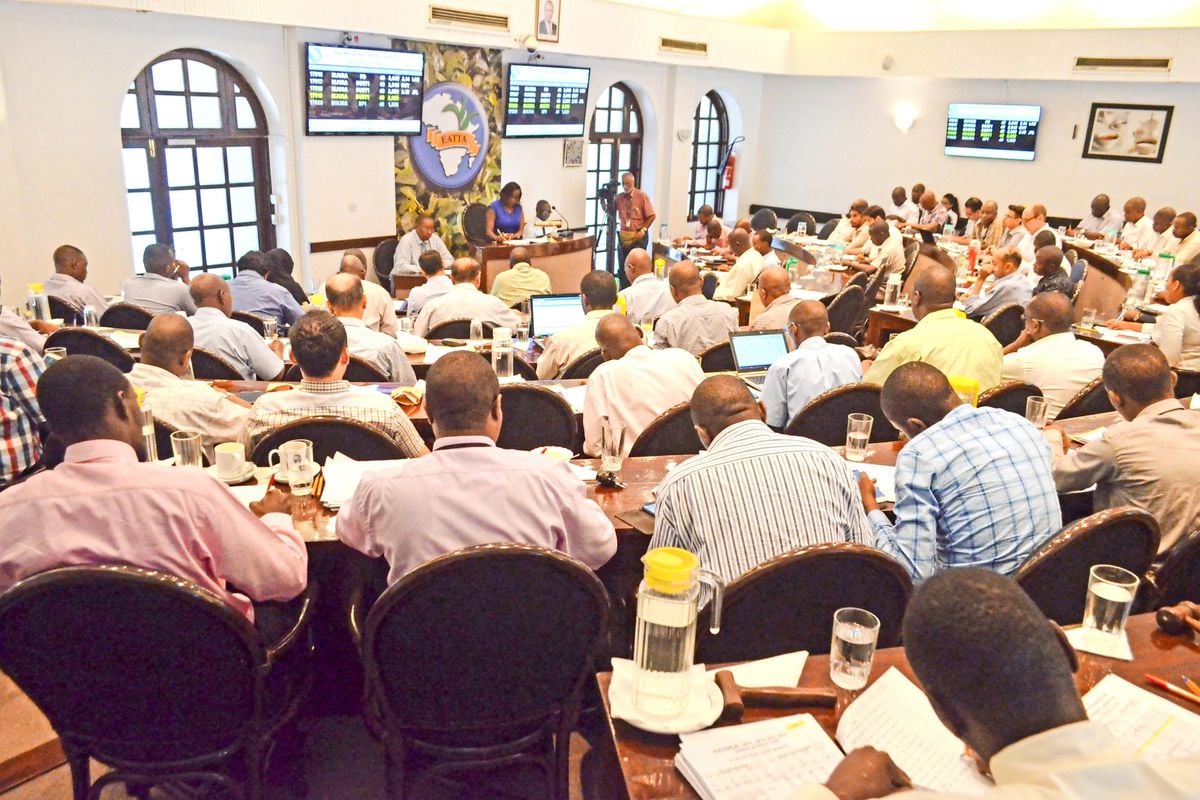
Every week, teas from across East and Central Africa change hands at the Mombasa Tea Auction through open, competitive bidding. Here is how a lot of tea makes that journey.
1. From factory to warehouse
Once tea is made and packed, the producer sends it to an EATTA member warehouse in Mombasa, where it is received, stored and kept ready for sale.
2. The broker values and catalogues
Producers appoint a broker to sell their tea. The broker draws samples, tastes and values each lot, and lists it in the auction catalogue with its grade, weight and other details.
3. Buyers taste before they bid
Samples go out to buyers ahead of the sale. Buyers taste them against the requirements of their own customers around the world and decide which lots to bid for, and how much each is worth to them.
4. The sale
On auction day, lots are offered one after another and buyers compete by bidding. The auction now runs on an electronic trading platform, which gives everyone the same view of each lot and records every bid. Prices are quoted in US dollars per kilogram.
5. Payment and delivery
After the sale, the buyer pays for the tea and the producer receives the proceeds through the bank. The warehouse then releases the tea to the buyer for blending, packing or export.
Why it matters
- Fair price discovery – open competition sets a transparent market price.
- Many origins, one market – Mombasa is the only tea auction that sells teas from several countries.
- Trust – clear rules, set by EATTA, govern every stage of the trade.