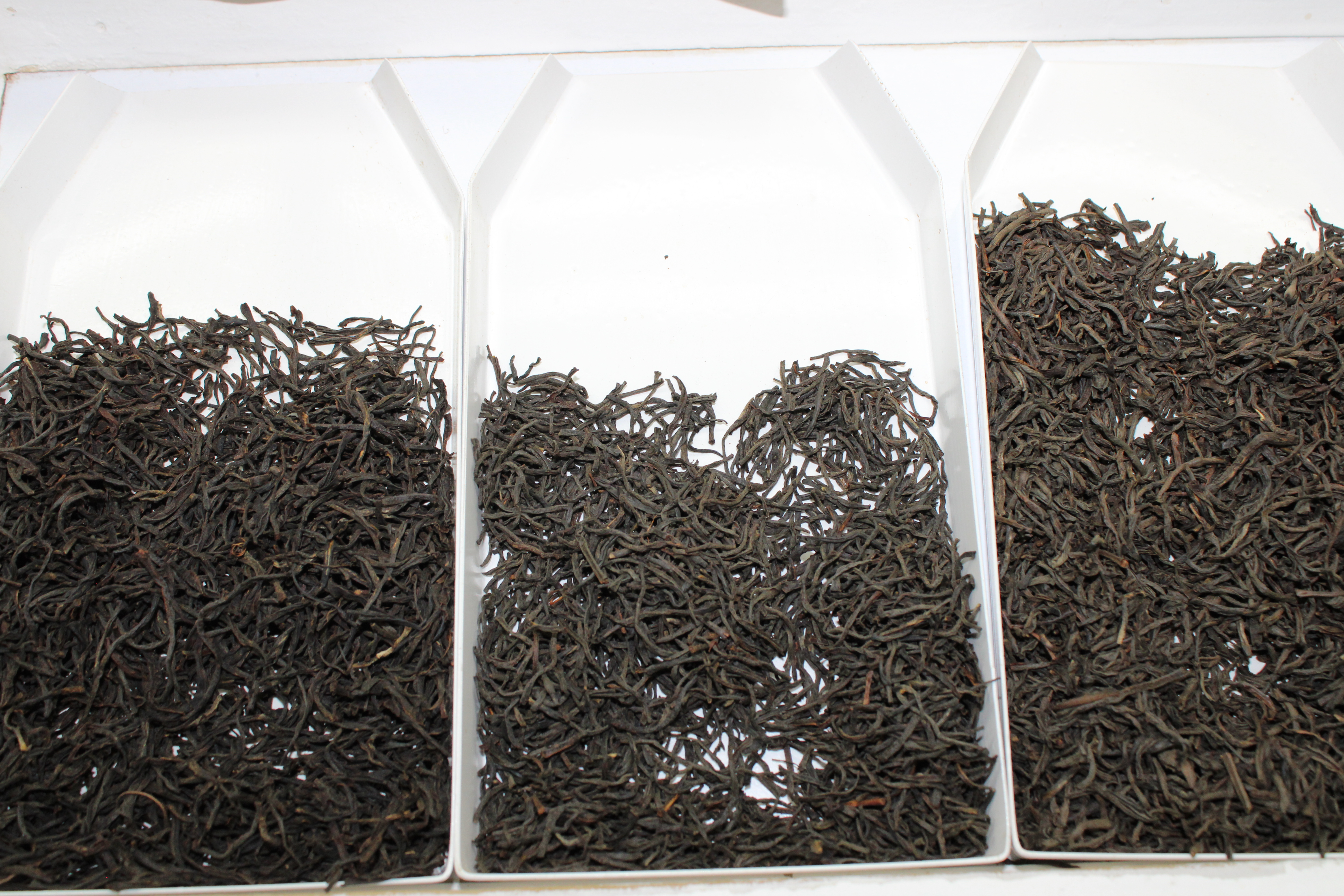
Almost all black tea starts the same way — freshly plucked green leaf — but how that leaf is broken and shaped decides what ends up in your cup.
The steps every black tea goes through
- Withering – the fresh leaf is spread out and air is passed through it, so it loses moisture and becomes soft and pliable.
- Rolling or cutting – the leaf is broken to release its natural juices. This is where CTC and orthodox part ways.
- Oxidation – often called “fermentation” in the trade. Exposed to air, the leaf turns from green to coppery brown and develops its colour and flavour.
- Drying (firing) – hot air stops oxidation and dries the tea so it keeps.
- Sorting and grading – the dried tea is sieved into grades by particle size.
CTC: crush, tear, curl
In CTC manufacture, the withered leaf passes through rollers with sharp teeth that crush, tear and curl it into small, hard, uniform granules. Because so much of the leaf surface is exposed, CTC tea brews quickly and gives a strong, bright, coloury cup that stands up well to milk and sugar. It is the tea of choice for tea bags and for many of the world’s biggest tea-drinking markets.
Kenya is overwhelmingly a CTC producer, and the Mombasa Tea Auction is the world’s largest auction for black CTC tea.
Orthodox: the traditional roll
Orthodox manufacture rolls the leaf rather than cutting it, keeping much more of the leaf whole. The result is a wider range of leaf sizes and appearances, and a cup that is often more nuanced, with more variation in aroma and flavour from garden to garden and season to season.
Orthodox teas are typically sold to buyers looking for speciality and premium products. In September 2025, the Mombasa Tea Auction began selling orthodox teas alongside CTC, giving African producers a new route to these buyers.
Which is better?
Neither — they serve different cups. CTC delivers strength, speed and consistency; orthodox offers character and variety. Many African producers are now making both to reach more markets.